

Spot Welding
Questions and Answers
If one alters the weld time from the desired range and exceeds the extreme either too long or short you risk surface expulsion, electrode mushrooming, and excessive indentation. If weld times are short you risk small nuggets and low weld strength or no welds.
Improper weld current selection can cause problems during resistance welding. The problems normally show up in the form of expulsion, indentation, electrode sticking, mushrooming or low weld strength. There is an ideal current range for every resistance weld set up. This will produce good weld nuggets with little or no expulsion, modest indentation and minimal electrode wear or sticking. Whenever you push the extremes of the current in the weld window either high or low you risk problems.
If the weld equipment is not properly cooled especially the electrodes weld failure is likely to occur. Poor cooling at the electrodes can cause them to mushroom prematurely which reduces the current density at the weld face and the nugget size will reduce. Poor cooling can be caused by low flow, warm water, improperly located cooling tubes, clogged/restricted tubes and no flow.
Low weld strength can be caused by anything which retards weld nugget growth or formation. It can also be caused by the condition of the materials being welded.
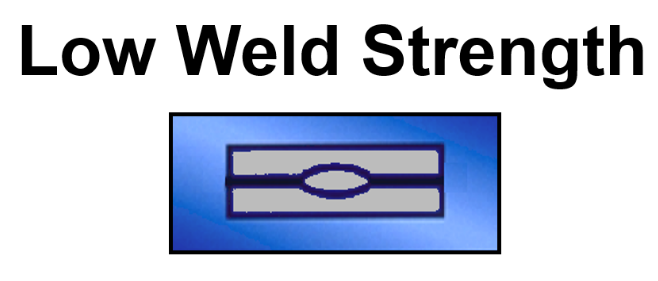
Internal cracks in the weld nugget can lead to decreased strength and need to be prevented or reduced.
Page 39 of 44
Have a Question?
Do you have a question that is not covered in our knowledgebase? Do you have questions regarding the above article? Click here to ask the professor.